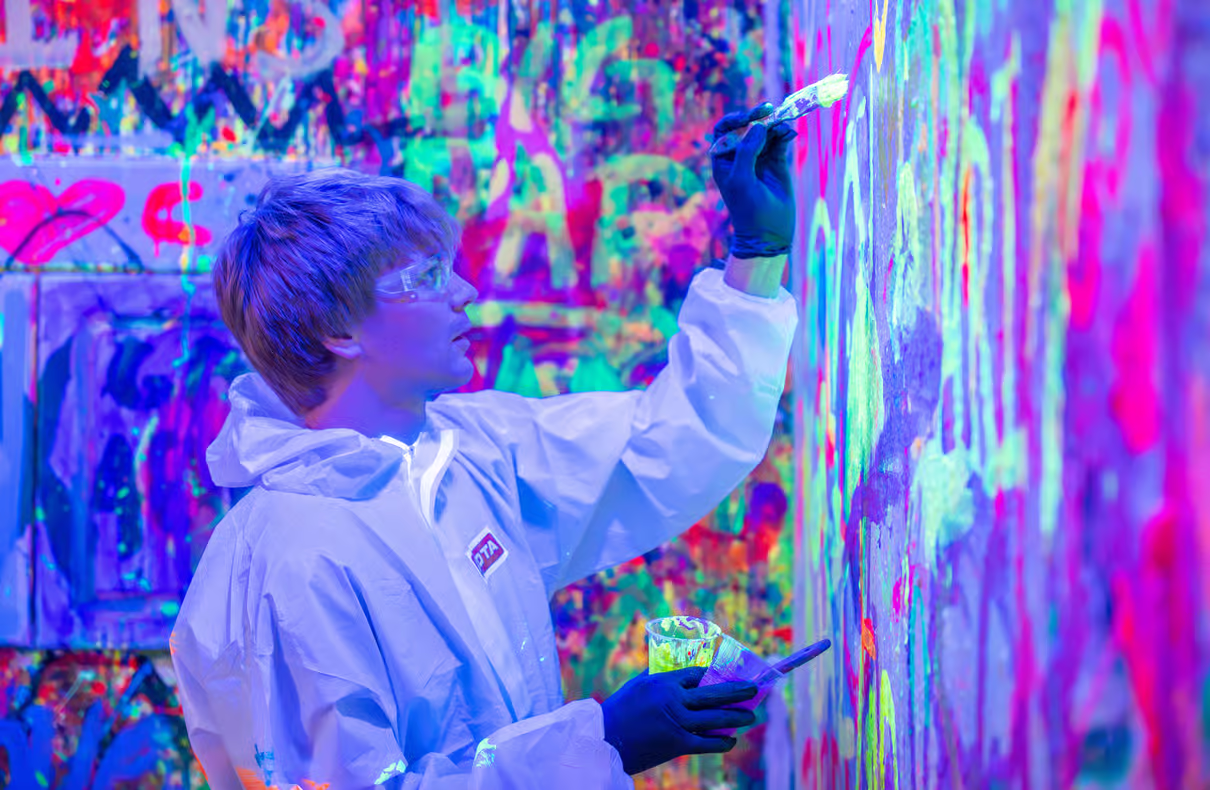
Houston has always been a city of reinvention. It bounced back from Hurricane Harvey. It rebuilt after the freeze. It absorbed wave after wave of newcomers seeking opportunity, carrying their histories and their heartaches with them. And somewhere along the way, between the bayous and the skyscrapers, between the taquerias and the art museums, Houstonians discovered something quietly radical: picking up a paintbrush and letting go.
Private paint therapy is not a trend. It’s not the boozy paint-and-sip night you did for someone’s bachelorette party. It’s something older, deeper, and far more personal — a clinical and creative practice that uses visual art-making as a vehicle for emotional processing, trauma release, and psychological growth. And Houston, with its sprawling diversity, its culture of toughness, and its surprisingly rich arts infrastructure, has become one of the best cities in America to explore it.
This is a deep dive into what private paint therapy actually is, why Houston is uniquely positioned to offer it, what a session looks like, who it’s for, and why more people — from burned-out executives in the Energy Corridor to grieving mothers in Katy — are quietly booking their first appointment and never looking back.
What Paint Therapy Actually Is (And What It Isn’t)
Let’s clear something up right away. Paint therapy — more formally called art therapy when delivered by a credentialed professional — is not about making beautiful art. You don’t need talent. You don’t need to know the difference between gouache and acrylic. You don’t need to have stepped inside a gallery since your fourth-grade field trip.
What you need is willingness. That’s it.
Art therapy is a mental health discipline rooted in the understanding that the creative process itself — the act of choosing a color, dragging a brush, layering pigment over pain — can communicate things that words simply cannot. The American Art Therapy Association defines it as an integrative mental health profession that uses the creative process to improve and enhance the physical, mental, and emotional well-being of individuals.
In a private paint therapy setting, you work one-on-one with a therapist or trained facilitator. The session is tailored specifically to you — your mood that day, your history, your goals, your resistance. There’s no classroom dynamic, no performance anxiety, no comparing your canvas to the person next to you. It’s just you, the materials, and someone trained to hold space while you make a mess.
The “private” element is more important than it might seem. Group art therapy has its place and its power, but there’s something categorically different about a session where the entire room — the music, the lighting, the prompts, the pace — is calibrated entirely around a single person. That level of attention changes things.
Why Houston Is the Right City for This
Houston doesn’t always get credit for its emotional depth. The city’s reputation is highways and humidity and football. But scratch the surface and you find a metropolis carrying enormous psychological weight.
Houston is the most ethnically diverse large city in the United States. It has one of the highest rates of uninsured residents in the country, meaning mental health services are often inaccessible to huge portions of the population. It has also endured repeated collective traumas — natural disasters, economic booms and busts tied to oil prices, the pandemic, and the ongoing weight of a city where many people came fleeing something difficult somewhere else.
That psychological complexity has quietly cultivated a hunger for alternative healing modalities. Traditional talk therapy works for many people, but it doesn’t work for everyone. Some people — especially those from cultures where verbal emotional expression is discouraged, or those who have experienced trauma that literally resists language — need a different door in.
Paint therapy offers that door.
Houston also has the arts infrastructure to support it. The Museum of Fine Arts Houston is one of the largest art museums in the United States. The Menil Collection is world-class. The Houston Arts Alliance pumps millions into the local creative economy each year. There is an existing culture of visual art appreciation here that makes paint therapy feel less foreign, less clinical, more like a natural extension of something the city already values.
And practically speaking, Houston’s geography helps. The city is enormous. There are private studios tucked into Montrose storefronts, wellness centers out in Sugar Land, converted garage spaces in the Heights, and serene suburban studios in The Woodlands. Whatever your neighborhood, whatever your commute tolerance, there’s likely a private paint therapy option within reach.
The Science Behind the Brush
This isn’t woo. This is neuroscience.
When you engage in creative visual activity, your brain shifts. The prefrontal cortex — the part responsible for rumination, self-criticism, and the endless loop of anxious thought — quiets down. The default mode network, which is heavily implicated in depression and anxiety when it’s overactive, finds a healthier rhythm. And the act of making physical marks on a physical surface engages the body in a way that purely verbal or cognitive therapies don’t.
There’s also the concept of bilateral stimulation — the idea that activities requiring coordinated movement of both sides of the body (like painting) can help process traumatic memories in ways similar to EMDR therapy. Some art therapists incorporate this explicitly, asking clients to paint with both hands simultaneously, or to work in broad sweeping motions that cross the body’s midline.
The color choices people make in therapeutic settings are also meaningful. Research has shown that color selection during emotionally activated states is rarely random. Someone in the grip of grief might reach for deep blues and grays without knowing exactly why. Someone processing anger might find themselves loading their brush with red before any cognitive decision has been made. The body knows things the mind hasn’t articulated yet. Paint therapy creates a space for those body-level truths to surface.
Houston’s private paint therapy practitioners are increasingly trained to hold that intersection — the therapeutic and the creative — with clinical rigor and genuine artistic sensitivity.
What a Private Session in Houston Actually Looks Like
Every provider is different, and that’s by design. But here’s a representative arc of what a private paint therapy experience in Houston might involve.
Before You Arrive
Most private paint therapy providers in Houston do an intake process before your first session. This might be a short questionnaire, a phone consultation, or a brief video call. The goal is simple: understand who you are, what you’re carrying, and what you hope to experience. This isn’t about diagnosing you. It’s about ensuring that the session is genuinely built around you, not around a generic template.
You might be asked about your comfort with messiness, your previous experience with art (if any), whether you have any physical limitations that might affect how you work, and what you’re hoping to explore. Some providers also ask about color preferences and aversions, which can be surprisingly revealing even before you’ve picked up a brush.
The Space Itself
Private paint therapy studios in Houston range from the minimalist to the maximally sensory. Some practitioners prioritize calm — white walls, natural light, soft music, neutral scents, a sense of sanctuary. Others create deliberately rich environments, with textured walls, art hanging everywhere, and materials displayed like a feast.
What they share is intentionality. These are not generic rooms. They are carefully considered spaces designed to lower your guard and invite something genuine.
You’ll typically find a range of materials available — acrylic paints, watercolors, inks, pastels, charcoal — and your facilitator may suggest a medium based on what you’ve shared in your intake. Acrylics offer speed and opacity, the ability to paint over mistakes, which some people find emotionally freeing. Watercolors are fluid and unpredictable, which can be either liberating or maddening depending on where you are in your process. Ink is permanent and confrontational. Charcoal is raw and physical.
The medium is part of the therapy.
Inside the Session
Sessions typically run between 60 and 90 minutes for a private experience. Your facilitator will open with a brief grounding exercise — sometimes breathwork, sometimes a body scan, sometimes simply sitting quietly with the materials in front of you and noticing what you notice.
Then comes the invitation. This might be a specific prompt (“paint how your week felt”) or a completely open canvas. In more clinically oriented sessions, the prompt might be tied to therapeutic goals you’ve discussed — processing a relationship, exploring an identity question, externalizing an emotion that’s been stuck.
What happens next is different every time and different for every person. Some people work in silence, absorbed and unselfconscious. Some people cry. Some people laugh. Some people work furiously and cover the canvas in five minutes; others spend the entire session on a single corner of the paper, working with microscopic intention.
Your facilitator is not passive during this time. They’re watching — not judging, but attending. They might offer a gentle observation (“I notice you keep returning to that same dark corner — what’s there?”) or a material intervention (“What if you tried using your fingers instead of the brush?”). They might simply sit with you in productive silence.
At the end, there’s usually a reflection period. You look at what you’ve made. Your facilitator might ask what you see, or what surprised you, or what the piece wants to say. This verbal integration is important — it bridges the preverbal, body-level experience of making the work with the cognitive processing that helps it stick.
You will leave with your painting. It is yours. What you do with it — hang it, photograph it, tear it up, bury it in the backyard — is entirely your choice.
Who Is Private Paint Therapy For?
The honest answer is: more people than you’d think.
People Processing Grief
Loss is one of the most common drivers of first-time paint therapy visits. Grief is notoriously resistant to language. The things you feel when you lose someone — the tangle of love and rage and relief and guilt and longing — don’t arrange themselves into clean sentences. But they do find their way onto a canvas. Many people report that their first paint therapy session after a loss was the first time they felt they had actually said something true about how they felt.
Trauma Survivors
For people who have experienced trauma, especially early childhood trauma or trauma involving violation or powerlessness, the control that paint therapy offers is itself therapeutic. You choose the colors. You choose the marks. You can paint over anything. The canvas is yours in a way that many things in a trauma survivor’s history were not.
Burned-Out Professionals
Houston’s energy sector, healthcare industry, and legal community are full of high-performing people running on empty. Burnout is not just tiredness — it’s a disconnection from the self, a hollowing out that happens when you’ve been performing competence for too long without any genuine self-expression. Paint therapy is the opposite of performance. There’s no right answer. There’s no deliverable. There’s no one to impress. For many professionals, that experience of being allowed to simply make something without it mattering is genuinely radical.
People Who’ve Hit a Wall in Talk Therapy
Some people love talk therapy and have been in it for years. Some of those same people reach a point where the words have run out — where they’ve said everything they can say and feel like they’re going in circles. Paint therapy can unlock new levels of insight for people who’ve already done significant therapeutic work verbally, because it accesses a different part of the psychological system.
Teenagers and Young Adults
Adolescence is a developmental period where emotional vocabulary is genuinely limited and social performance anxiety is often extreme. Private paint therapy — with its one-on-one structure and zero judgment atmosphere — can be particularly powerful for young people who would never be able to articulate what’s going on for them in a traditional therapy setting.
Anyone Who’s Curious
You don’t need a diagnosis. You don’t need a crisis. You can come simply because you’ve been working too hard and haven’t made anything with your hands in years. You can come because you’re at an inflection point and want clarity. You can come because something about the idea won’t leave you alone. That curiosity is a valid and sufficient reason.
Finding the Right Private Paint Therapy Experience in Houston
Houston’s wellness landscape is vast and uneven. Here’s how to navigate it thoughtfully.
Look for Credentials — But Understand the Landscape
A board-certified art therapist (ATR-BC) has completed graduate-level training in both art and therapy, has supervised clinical hours, and has passed a national exam. If you’re dealing with a clinical mental health concern — diagnosed depression, PTSD, an eating disorder — you want someone with these credentials.
However, the private paint therapy experience in Houston also includes gifted facilitators who may not carry clinical credentials but who have deep training in therapeutic art facilitation, trauma-informed practice, or somatic approaches. For wellness-oriented experiences — not clinical treatment — these practitioners can offer something genuinely valuable. The key is transparency: a good practitioner will be clear about what they are and are not, and will refer you to clinical support if what you need goes beyond what they can offer.
Ask About Their Approach
Some paint therapy practitioners in Houston work from a Jungian framework, using paint as a means of accessing the unconscious and exploring archetypes. Some work somatically, emphasizing the body’s role in the creative process. Some are trauma-informed and trained in understanding how the nervous system responds during creative work. Some are spiritually oriented, integrating mindfulness or even more explicit spiritual frameworks into the session.
None of these approaches is inherently superior. The right approach is the one that resonates with you. Ask before you book.
Consider the Setting
Do you want to be in the city or outside it? Do you want a sleek, modern studio or something that feels more like a home? Do you want to be able to walk to a coffee shop afterward, or would you rather drive back through the pine trees of The Woodlands with your painting propped in the passenger seat?
The setting matters more than people realize. The atmosphere of the physical space will shape your experience of the session. Take time to think about what environment would help you feel most open.
Start With One Session
You don’t need to commit to a package or a program. Book one session. See what happens. The experience will tell you what it needs to tell you, and you can decide from there.
The Cultural Dimension: Houston’s Diversity and Paint Therapy
One of the most compelling and underexplored dimensions of paint therapy in Houston is its relevance across cultural contexts.
In many of the cultures represented in Houston’s population — Mexican, Vietnamese, Nigerian, Indian, Salvadoran, Chinese, and dozens more — verbal emotional disclosure to a professional stranger carries significant stigma. The idea of sitting across from a therapist and talking about your feelings is culturally loaded in ways that are difficult to overstate.
But making art? Making something with your hands? That crosses cultural lines in a way that talk therapy often doesn’t. Many of Houston’s diverse communities have rich visual art traditions. The act of painting, drawing, or mark-making is not foreign — it’s often deeply ancestral.
Private paint therapy, when offered by culturally competent practitioners, can serve as a genuinely more accessible entry point to mental health support for communities that have historically been underserved by traditional mental health infrastructure. This is one of the most exciting frontiers in Houston’s wellness conversation, and it’s happening quietly in studios across the city.
What to Expect After Your Session
The day of your session, you might feel tired. Emotionally wrung out in the good way, the way you feel after a long, honest conversation. You might feel lighter. You might feel confused — unsure of what happened or what it meant, but certain that something did.
In the days that follow, pay attention. People who’ve done private paint therapy sessions often report that images from their painting stay with them, that colors show up in their dreams, that they find themselves thinking about what they made in idle moments. This is the work continuing. The session doesn’t end when you leave the studio.
Some people book a follow-up session. Some people start keeping a visual journal. Some people sign up for a weekend painting workshop, not for therapy but because they’ve remembered that they love making things. Some people feel complete after a single session and carry it quietly for years.
All of these are valid outcomes.
The Bigger Picture: Why Houston Needs This
Mental health care in Texas faces structural challenges that are well-documented and deeply serious. The state has one of the lowest ratios of mental health providers to residents in the country. Wait times for psychiatric appointments can stretch for months. Insurance coverage is inconsistent. Stigma, while slowly declining, is still real.
Private paint therapy won’t solve those systemic problems. But it offers something that the system often can’t: immediate access, low barrier to entry, no waiting list, no diagnostic prerequisite, and a form of care that many people can engage with even when they aren’t ready to call themselves a patient.
In a city as complex, as battered, and as brilliantly alive as Houston, the canvas is not a luxury. For a growing number of people, it’s becoming something closer to a lifeline — one brushstroke at a time.
Final Thoughts: The Courage to Pick Up the Brush
There’s a certain courage required to sit down in front of a blank canvas with no agenda except honesty. It’s a deceptively vulnerable act. You’re not producing anything useful. You’re not performing competence. You’re simply letting something in you find its way to the surface.
Houston is a city that respects toughness. But the most interesting thing happening in its wellness landscape right now is a quiet, growing consensus that real strength sometimes looks like picking up a brush you haven’t touched in thirty years, making something messy and imperfect and entirely your own, and letting it mean something.
Private paint therapy won’t fix everything. But it might open a door you didn’t know was there.
And in a city that has always known how to rebuild, that kind of opening matters more than ever.
Looking to explore private paint therapy in Houston? Search for board-certified art therapists (ATR-BC) through the American Art Therapy Association’s therapist locator, or explore wellness-oriented paint therapy studios in the Montrose, Heights, and Midtown neighborhoods, as well as suburban options in The Woodlands, Sugar Land, and Katy.