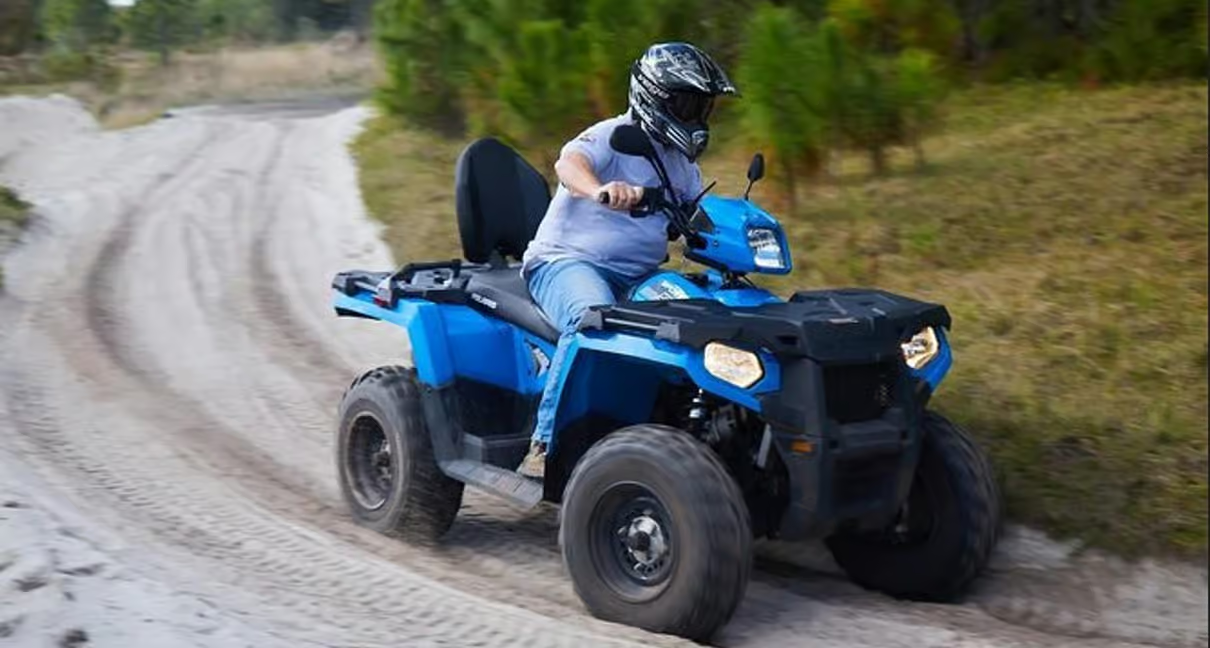
Houston is a city of contradictions. It’s a place of gleaming medical towers and humid bayous, of world-class restaurants and open ranch land stretching to the horizon. Most visitors — and even many locals — spend their entire lives inside its loop, never quite discovering that just beyond the sprawl lies some of the most accessible off-road riding country in the southern United States.
Nomad ATV riding in Houston is not a niche hobby for diehard gear-heads. It’s become a culture — a legitimate escape hatch from the city’s relentless pace. Whether you’re a weekend warrior with a mud-caked helmet and a truck full of gear, or someone who just wants to throw a four-wheeler into high gear for the first time, Houston’s surrounding terrain delivers a kind of freedom the city itself rarely offers.
This isn’t about manicured trails or sanitized adventure parks (though those exist too). This is about the full experience — the grit, the gear, the community, the sweat, and the particular satisfaction of watching your back tires spray red Texas clay twenty feet into the sky.
Why Houston Is Actually Perfect for ATV Culture
At first glance, Houston doesn’t scream “off-road paradise.” It’s flat. It’s dense. It’s known for traffic, not trails. But the geography around the greater Houston area is deceptively varied, and its proximity to East Texas, the Gulf Coast flatlands, and the Hill Country’s outer edges gives riders a broader menu than most American metro areas can offer.
The soil east of Houston — deep into the Piney Woods region — is a dream for mud riding. After a decent rain, those pine forest trails turn into a genuine test of man, machine, and mud flap. To the west and northwest, the land opens into broader pasture country where speed becomes king and long, open runs reward riders who’ve built their machines for flat-out velocity rather than technical maneuvering.
Then there’s the sand. Southeast Texas has pockets of sandy terrain that behave almost like coastal dunes — softer, more forgiving underfoot but demanding in their own way as wheels sink and engines lug harder to keep momentum. Riding sand requires a different technique than mud or hardpack, and seasoned Houston-area riders often rotate between terrain types throughout the season, treating each as its own discipline.
The climate plays a role too. Houston’s long, warm seasons mean ATV riding is viable for more of the year than in most northern states. The flip side — and it’s a big one — is that summer riding means heat management becomes part of the skill set. Early mornings and evenings become prime time from June through September, and proper hydration isn’t just advice; it’s strategy.
The Nomad Philosophy: Riding Without a Fixed Address
The term “nomad” gets thrown around a lot in outdoor culture, but in the Houston ATV scene, it carries real meaning. A nomad rider doesn’t belong to one ranch or one trail system. They move. They explore. They build a mental map of Southeast Texas through accumulated seat time across dozens of different properties and parks.
This culture of mobility is partly born out of necessity. Unlike states with vast public land networks, Texas is overwhelmingly privately owned. There’s no national forest outside your back door where you can legally ride at will. This means the nomad approach — building relationships with landowners, joining riding clubs, rotating between commercial parks, and staying plugged into the community — is not just a lifestyle preference. It’s the infrastructure of the sport itself.
The best Houston-area ATV nomads tend to operate through a network of informal knowledge. Word spreads through riding groups on social media, through conversations at gear shops, through the easy camaraderie that develops when strangers share a trailhead. Someone mentions a new property that just opened for public riding two hours north. Someone else just got back from a weekend at one of the established parks in the Sam Houston National Forest corridor. The information flows, and the nomad follows it.
It creates a scene that is, frankly, more interesting than a single destination could be. Every outing is potentially a discovery. Every new property brings a new set of challenges, a different landscape personality, a different crowd. You never quite exhaust it.
Key Riding Destinations Within the Houston Orbit
The Crockett and Davy Crockett National Forest Adjacent Areas
The Sam Houston and Davy Crockett national forests, while operating under strict regulations regarding motorized vehicles, form the geographic anchor of a broader riding corridor in East Texas. The towns and private properties that ring these forests have historically been home to riding clubs and private parks that capitalize on the rugged terrain. Pine-needle-carpeted trails, creek crossings, and the distinctive East Texas landscape make this area a pilgrimage for Houston riders willing to make the roughly two-hour drive.
The Navasota River Corridor
Running roughly north-south just west of the national forests, the Navasota River area features bottom-land terrain that gets properly dramatic after rain. Private hunting and recreation properties along this corridor sometimes open for ATV use, and the combination of dense vegetation, river crossings, and variable terrain has made it a favorite among riders who want something more technical than open fields but less punishing than full-on rock crawling.
Southeast Texas Pine Belt
From Lufkin down through Jasper and Woodville, the Southeast Texas pine belt offers some of the most consistent ATV riding in the region. Several commercial parks have established themselves here over the past decade, recognizing the demand from Houston’s enormous metro population. These parks vary considerably in size, terrain type, and amenities — some are bare-bones affairs with a cleared trail system and not much else, others offer camping, wash stations, rental equipment, and organized weekend events.
The Gulf Coast Flatlands
South and southeast of Houston, heading toward the coast, the terrain flattens dramatically and the soil shifts toward the sandy-loam mixtures that characterize the coastal prairie. This is different riding — less technically demanding in many ways but with its own character. Large ranches in this zone occasionally open for recreation, and the wide open spaces reward a different kind of machine setup than the wooded trails to the northeast.
Building Your Houston ATV Kit: What the Locals Actually Ride
Walk through any staging area at a Houston-area ATV park and you’ll notice certain patterns in what people choose to ride. The terrain diversity and mud-heavy conditions have shaped local preferences in interesting ways.
Sport ATVs — the fast, light, performance-oriented machines — are popular among younger riders and those who lean toward racing-style riding. They’re quick, responsive, and genuinely exciting on hardpack and flowing trails. But they can punish you on technical terrain, and in deep mud, their lighter builds sometimes work against them.
Utility ATVs, particularly the larger-displacement machines from manufacturers like Can-Am, Yamaha, and Polaris, dominate the working-class end of the spectrum. They’re heavier, they’re capable of hauling gear, and their more substantial frames shrug off the abuse of rocky creek beds and submerged log crossings with less drama. For multi-day camping trips to remote properties, utility builds are the practical choice.
Side-by-sides — the two-or-four-seat enclosed UTVs that have exploded in popularity over the past decade — have become enormously common in the Houston scene. They offer a more social riding experience, better roll-cage protection, and the ability to carry passengers, making them popular for family outings. Their wider footprint can be a disadvantage on tight wooded trails but an advantage on open terrain where stability counts.
Regardless of machine choice, mud-specific tires are essentially non-negotiable for serious East Texas riding. The aggressive paddle tread of a mud tire makes the difference between forward progress and a very expensive anchor in the clay-rich soils east of the city. Lift kits, snorkels for deeper water crossings, and aftermarket lighting rigs are common upgrades among dedicated riders.
The Riding Community: Clubs, Crews, and Trail Culture
Houston’s ATV community is larger and more organized than most outsiders realize. Riding clubs have existed in the area for decades, and while social media has changed how they communicate and recruit, the core function remains the same: shared resources, group outings, and collective advocacy for access to riding land.
Group riding in Texas has its own etiquette. Faster riders traditionally pass on the left and give a hand signal. Groups stop and regroup at trail intersections to avoid losing slower riders. If someone goes down, you stop — period. The unwritten rules are enforced by social pressure and genuine mutual concern, and they’re taken seriously enough that violators tend to find themselves uninvited from future group runs.
Trail stewardship is a recurring topic within serious riding communities. Access to private land depends entirely on the reputation of the riders who use it. Tearing up vegetation beyond established trails, leaving trash, or behaving recklessly near property boundaries can — and has — caused landowners to close access entirely. The nomad culture, at its best, carries an ethic of reciprocity: you treat the land well, and the land stays available to you.
Events bring the community together in concentrated form. Houston-area riding parks regularly host organized mud runs, competitive events, and club ride days. These gatherings are part social event, part exhibition, and part informal gear expo. The conversations you have at a trailhead before a group ride carry more practical knowledge about local conditions than anything you’ll read in a magazine.
Practical Realities: Safety, Permits, and Seasonal Considerations
Safety
ATV riding is a high-consequence activity. The statistics on injuries are real, and they deserve honest acknowledgment. Helmets are not optional — they are the absolute baseline of safe practice. Full-face helmets offer substantially more protection than open-face or half-shell options, and for trail riding with the potential for branch strikes and debris, they’re the right call.
Protective gear — chest protectors, knee and shin guards, proper boots, gloves — is standard among experienced riders and noticeably absent among beginners. This is exactly backwards from how it should be. New riders, who are more likely to make errors in judgment, are the ones who most need the protection that experienced riders have learned to rely on.
Riding with a group or at minimum letting someone know your route and expected return time is basic protocol. Remote riding areas in East Texas have spotty cell coverage, and mechanical breakdowns happen to even well-maintained machines. The nomad lifestyle is freeing, but it shouldn’t mean riding alone in remote areas without a recovery plan.
Access and Permits
Texas does not require ATV registration for off-road-only use on private property, which simplifies one element of the access equation. However, commercial riding parks have their own liability waiver and day-pass systems, and many now require proof of a safety certification for children under a certain age.
Trespassing is taken seriously in rural Texas. Never assume that open land is accessible without permission. The nomad approach of building relationships and staying networked is partly about fun and partly about staying legal.
Seasonal Notes
Spring and fall are the prime riding seasons around Houston. Temperatures are manageable, rainfall is frequent enough to keep trails interesting without turning them impassable, and the light stays good into the evening hours. Summer riding requires heat management strategies — early starts, increased water intake, rest in shade during peak afternoon heat. Winter riding is generally mild by national standards, though cold fronts can make muddy conditions genuinely unpleasant and wet gear can chill you faster than you expect.
The First-Timer’s Entry Point
If you’re new to the Houston ATV scene and not sure where to start, the commercial parks in the Southeast Texas and East Texas corridors offer the most approachable entry. Several offer equipment rentals, which eliminates the need to invest in a machine before you know whether you’ll stick with the sport. Guided trail rides or park staff orientation are available at some facilities and are worth the extra time if you’re genuinely starting from zero.
Connecting with a riding club through social media is often the fastest way to go from zero to having a group to ride with. The Houston ATV community tends toward the welcoming end of the outdoor sport spectrum — experienced riders remember what it was like to not know anything, and most are happy to offer guidance, provided you show up with the right attitude and proper safety gear.
Gear shops in the greater Houston area — particularly in the Highway 59 and I-10 East corridors, which run toward the primary riding country — are knowledgeable about local conditions and can point you toward currently active parks and clubs. The relationship between local shops and the riding community is symbiotic enough that shop staff often ride themselves and have firsthand intelligence about trail conditions and access status.
What Keeps People Coming Back
There’s a particular quality to the experience of piloting a machine through terrain that resists you — mud that grabs, hills that push back, creek crossings that demand commitment. It demands full presence. For the duration of a trail run, there is no email, no traffic, no ambient background noise of urban life. There is only the machine, the terrain, and the decisions you make in real time.
Houston is a city that can feel relentless in its busyness. The nomad ATV culture offers something genuinely countercultural within the broader Houston experience: a set of values built around physical engagement with land, shared experience without pretension, and a reminder that this enormous, complex, layered city sits in the middle of some extraordinary country.
The red clay stays on your boots for days. You’ll find it in your truck, in your gear bag, in the folds of your jacket. Most riders take that as a sign they did it right.
Whether you’re gearing up for your first run through the East Texas pines or adding another property to a riding resume that already spans a dozen counties, Houston’s nomad ATV culture has room for you. The trails are out there. The mud is waiting.