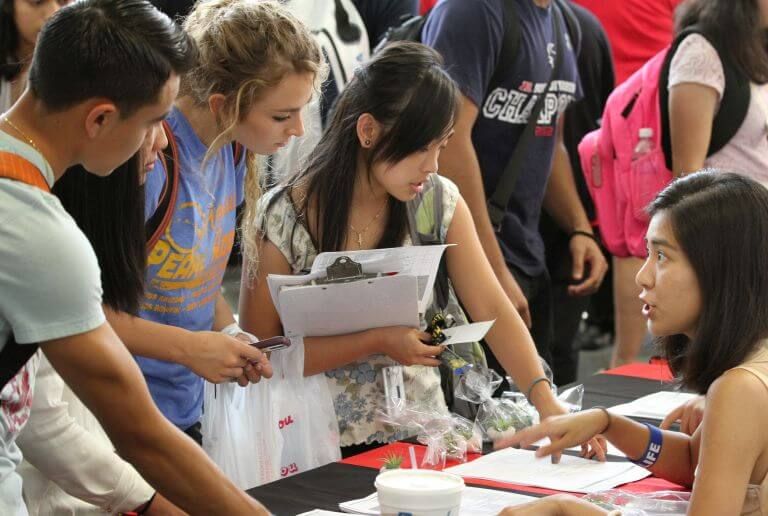
Houston doesn’t always make the first cut when people rattle off America’s great art cities. New York gets the galleries, Los Angeles gets the industry, Chicago gets the architecture conversation. But anyone who has spent real time in Houston’s cultural landscape knows the truth: this is a city with deep, well-funded, genuinely passionate commitment to art education at every level — from three-year-olds wielding paintbrushes in a museum basement to postgraduate fellows producing solo exhibitions in world-class spaces.
The infrastructure here is formidable. The institutions are serious. And the range of entry points — from community programs with sliding-scale fees to internationally competitive residencies — is more comprehensive than most cities twice Houston’s size. This is a guide to that ecosystem.
The Glassell School of Art: Houston’s Crown Jewel
You cannot have an honest conversation about art education in Houston without starting here. The Glassell School of Art at the Museum of Fine Arts, Houston is a dynamic art community that engages artists of all ages, experiences, and backgrounds, offering programs for children, teens, and adults, as well as the internationally recognized Core Residency Program.
What makes Glassell unusual — and genuinely special — is its position inside an encyclopedic museum. Students at every level are learning in the same building that houses one of the most significant art collections in the American South. That’s not a minor detail. The osmosis matters. You walk past work by Rothko and Basquiat on your way to a ceramics class. That changes how you approach your practice.
The school operates across a remarkably wide age spectrum. The Glassell Junior School offers children’s art classes for ages 3 to 14, designed to nurture creativity, build confidence, and develop artistic skills in a vibrant, museum-connected setting. There’s also an Early College Program, providing a bridge for young artists developing portfolios for college applications while engaging with peers who take the work as seriously as they do.
For adults, the Studio School offers rigorous continuing education, and the programming philosophy reflects a clear institutional ambition: the Glassell School of Art aspires to be a leading institution shaping the future of art and art education, embracing its unique position within an encyclopedic museum and welcoming the dynamism and depth this brings into studios.
The Core Residency: Where the Real Action Is
If Glassell is Houston’s premier art school, the Core Residency Program is its most prestigious jewel. Established in 1982, the program has implemented significant changes affirming its commitment to supporting emerging artists — now structured as a two-year program, with Core Fellows receiving $100,000 ($50,000 per year) plus a $3,000 annual health stipend over 23 months.
The alumni list alone tells you what kind of company you’d be in. Alumni of the program have included Leandro Erlich, Trenton Doyle Hancock, Julie Mehretu, Shahzia Sikander, Leslie Hewitt, Danielle Dean, and Sondra Perry. These are not emerging artists anymore — they are defining figures of contemporary art. The Core Program launched careers that are now in permanent museum collections worldwide.
In the redesigned program, Fellows participate in a group exhibition accompanied by a publication in their first year. In their second, each fellow mounts a solo exhibition accompanied by a dedicated catalogue. Critics-in-residence also participate in the first-year exhibition, then develop a second-year project aligned with their professional goals.
The resources made available to fellows go well beyond the financial. Fellows benefit from regular studio visits by regional, national, and international artists and curators, access to Glassell studios for painting, printmaking, digital and film photography, sculpture, jewelry, and ceramics, and borrowing privileges at the Museum’s Hirsch Library and Rice University’s Fondren Library.
The program also recently introduced a Core Alumni Fellowship — a short-term studio residency allowing previous Core Fellows who completed their residency five or more years ago to apply for a studio residency in Houston for three, six, or nine months. It’s a rare acknowledgment from an institution that its relationship with artists doesn’t end at the diploma or the final exhibition.
University of Houston: Academic Rigor Meets Creative Freedom
For those pursuing formal degrees, the University of Houston’s School of Art — housed within the Kathrine G. McGovern College of the Arts — offers one of the most robust academic programs in the region.
The three-year MFA Program offers concentrations in Painting, Sculpture, Photography/Digital Media, Graphic Design, and Interdisciplinary Practice and Emerging Forms. Built into each concentration is the ability to extend outward by working one-on-one with faculty mentors across the School of Art, or across the University through a Faculty Affiliate Network.
That Faculty Affiliate Network is worth examining closely. This network brings the vast scholarship of a premier research institution to the threshold of the School of Art, in areas ranging from biology to engineering, to cultural studies, philosophy, and beyond. In an era when the most interesting artistic work happens at disciplinary intersections, that kind of institutional support is genuinely valuable.
The facilities are equally serious. MFA students work in private studios in the Elgin Street Studios building, located on the northeast corner of the Arts District, with access to fully equipped wood and metal shops, covered outdoor work space, a spray booth, digital lab, dedicated graduate exhibition spaces, and common indoor and outdoor gathering spaces.
The interdisciplinary concentration deserves special mention. The MFA program in Interdisciplinary Practice and Emerging Forms recognizes that contemporary practice is often located between or beyond traditional disciplines, defining art-making as a series of approaches supported by theory, analysis, and conceptualization. Students are encouraged to combine systems of knowledge, challenge conventions of presentation, and identify new fields of investigation. For artists who refuse to work within a single medium or tradition, this is exactly the kind of academic container that doesn’t feel like a container at all.
The undergraduate BFA programs are equally well-supported. Students in the Sculpture program, for instance, can pursue internships at institutions like DiverseWorks and the Contemporary Arts Museum Houston, learning about the operation of for-profit and non-profit institutions by working as gallery assistants, curatorial and research assistants, and in educational programming and preparatory departments.
The school’s geographic location amplifies everything. As the program itself acknowledges, graduate study in a city with world-class cultural institutions, innovative performing and visual arts organizations, and the ecosystems to support the livelihood of artists is ideal — and Houston is the fourth largest and most diverse city in the U.S.
Houston Christian University: Faith, Craft, and Ambition
HCU’s School of Fine Arts approaches art education from a specific vantage point — one grounded in the idea that creativity is an act of meaning-making in the deepest sense. The school’s mission is to mentor and educate students towards professional excellence in artistic creation, aiming to be the premier Christian school of fine arts through commitment to apprenticeship across creative disciplines, building on traditional foundations with an eye towards tomorrow’s opportunities.
What this looks like in practice is a program that takes formal training seriously while remaining attuned to the question of why making art matters. HCU currently offers programs in Animation, Cinematic Arts, Creative Writing, Graphic Design, Music, Narrative Arts, Studio Art, and Video Game Design — among others — at the BFA and BA level.
The campus itself offers students immediate access to exhibition opportunities. Houston Christian University is home to on-campus gems like the Fine Art Museum, Contemporary Art Gallery, and the exhibition space Gallery 220, which offer direct pathways into the larger artistic community, providing unique opportunities to engage with art installations, meet local artists, and display student work.
Houston Community College: Access as Philosophy
Not every artist starts with four years and a portfolio review. Houston Community College understands this, and its art program has built a genuine reputation for being both academically credible and genuinely accessible.
HCC graduates exhibit their work in commercial galleries, alternative art spaces, and juried exhibitions, and many successfully transfer to bachelor’s degree programs such as the University of Houston, the Savannah College of Art and Design, and the Kansas City Art Institute.
That transfer pathway matters enormously. For students who need to build skills and confidence before committing to a four-year program — or who are balancing work, family, and the cost of education — HCC provides a legitimate on-ramp to serious art careers. The school is accredited by the National Association of Schools of Art and Design (NASAD), which means the coursework is recognized at the level you’d expect it to be.
University of Houston–Clear Lake: Design Thinking for Working Artists
UHCL’s Art and Design program leans toward practical application without sacrificing conceptual depth. The BFA curriculum has three core areas — Studio Art, Graphic Design, and Art Education — with students moving into specialized courses in one of these three areas after completing core requirements.
The program’s language is refreshingly honest about the realities of an art career. Students leave the program with the unique ability to fill positions in the corporate world, strike out on their own ventures, compete in the art market, and become candidates for further study. Graduates work as advertising designers, animators, creative directors, photographers, sculptors, and more.
For students who want to teach, the program offers a direct pathway. For those who want to work in design industries, the graphic design concentration provides marketable skills alongside studio training. And for those who simply want to make things — the studio art track offers that too, culminating in a BFA exhibition that invites students to present work as working artists.
Art League Houston: Community at the Center
What Art League Houston does is harder than it looks. It holds together a community of adult learners, professional artists, and complete beginners, while also running programs for teenagers and advocating for arts access citywide.
Founded in 1968, the Art League School offers a wide range of educational offerings and creative opportunities to over 1,200 students annually through studio art classes and workshops. The programming is designed for adults of all backgrounds and levels of artistic experience — meaning someone who has never held a brush and someone who has been painting for decades are both genuinely welcome.
The teen programming is where Art League Houston’s civic commitments become most visible. The Summer Intensive for Teens (SIFT) offers Houston-area high school students ages 14 to 17 an accessible, tuition-free studio art program that includes 4.5 weeks of intensive studio art training, mentorship, group critiques, site visits, and one-on-one meetings with local curators and artists.
Since 2018, ALH has provided full scholarships to all students in each cohort, supported through dedicated fundraising efforts to ensure more equitable access to arts education for talented young artists in the Greater Houston area.
This is not supplemental programming. Students in SIFT work for six hours a day across a range of disciplines — including technical sketching, collage, textiles, performance art, bookbinding, laser cutting, costume design, watercolor, relief printmaking, ceramics, realism, and digital media. They collaborate on murals that get installed on the building’s exterior. They co-design their own culminating exhibition. They are treated, from the first day, as real artists with something serious to say.
The Art League School also runs a Flexible Access program — a pay-what-you-can visual art course offering for ages 17 and up, part of a larger initiative to prioritize arts access and equity. In a city with Houston’s income inequality, that kind of structural commitment to access is worth acknowledging.
Houston School of Art & Design and Houston Monart: The Early Years
For younger students and families, Houston has several dedicated options that go beyond the afterschool art class cliché.
Houston School of Art & Design, recently recognized by the Houston Chronicle as a 2025 finalist for Best After School Program, runs lessons tailored to individual interests and goals — never one-size-fits-all, guided by passionate teachers who work professionally outside the classroom. The emphasis on individualization matters: children don’t learn art the same way they learn arithmetic, and schools that treat them as if they do tend to extinguish exactly the creative instinct they’re trying to develop.
Houston Monart takes a different approach, building on the Monart method — a structured observational drawing system — while extending into digital territory. The school is the only Houston institution teaching the Monart method, and has incorporated computers, providing Apple laptops and Wacom tablets to teach on software platforms including GIMP, Game Maker, and Sculptris — tools used by professional graphic designers, product designers, engineers, and architects.
This combination of traditional fundamentals and digital fluency reflects something smart about how creative careers actually work. The artists who thrive professionally tend to be fluent in both.
What Makes Houston’s Art Education Scene Distinctive
Several things stand out when you step back and look at the full picture.
First, the range. Houston’s art education ecosystem runs from three-year-olds in museum classrooms to postgraduate fellows producing solo exhibitions at the MFAH. That full spectrum — and the institutional care given to each level — is unusual.
Second, the access ethic. Multiple institutions have made deliberate structural commitments to equity: Art League Houston’s tuition-free teen program, its pay-what-you-can adult classes, HCC’s affordable community college pathway, and the Core Residency’s fully funded fellowship. Access to serious art education in Houston is not purely a function of what you can afford.
Third, the city itself functions as an educational resource. The Museum District, the concentration of major institutions, the gallery scene in Montrose and the Heights, the murals, the public art — all of it constitutes an ambient curriculum that formal programs can draw on and connect to. UH’s Sculpture program explicitly uses museum internships as academic credit. Glassell builds its entire identity around its museum connection. Art League Houston takes students on site visits. The city isn’t a backdrop; it’s part of the lesson.
Finally, Houston’s arts community has a reputation — well-earned by multiple accounts — for being collaborative rather than competitive. That matters in an educational context. Students who train here tend to enter a local ecosystem where artists support each other, share resources, and make room for newcomers. The Core Residency actively requires Fellows to engage with that community, not just produce work in isolation.
A City Worthy of Your Creative Education
None of this means Houston is without its challenges — arts funding is perennially contested, institutional resources are unevenly distributed, and the geography of a sprawling city can make access difficult for students without reliable transportation.
But the honest assessment is that Houston has built something genuinely impressive: a layered, diverse, access-conscious ecosystem of art education that serves the three-year-old just discovering color, the teenager who needs a tuition-free summer of real studio work, the undergraduate trying to build a serious practice, the graduate student seeking mentorship and private studio space, and the emerging professional artist ready for the kind of support that can turn a promising career into a lasting one.
That’s not nothing. In fact, for anyone serious about art — making it, studying it, teaching it, or simply learning to see the world through it — Houston might be exactly the city to pay attention to.