
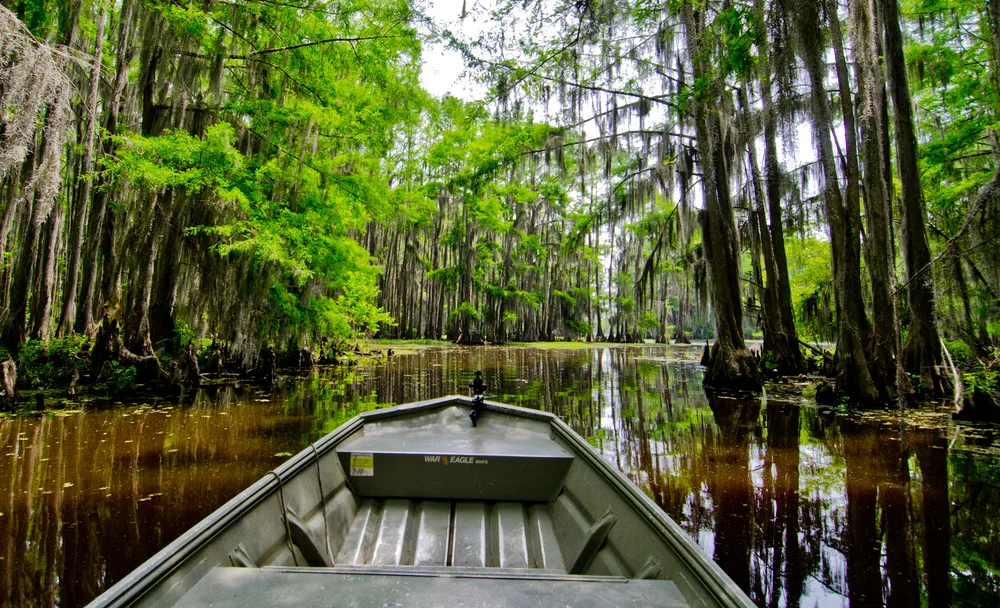
In the shadowed embrace of East Texas’s Piney Woods, Caddo Lake State Park emerges as a living tapestry of ancient waters and whispered legends. Spanning 469 acres along the Texas-Louisiana border, this park guards the western edge of Caddo Lake, the state’s only natural lake and a sprawling 26,810-acre expanse of cypress-draped bayous. Established in 1933 through the labors of the Civilian Conservation Corps, the park has long served as a sanctuary where the boundaries between history, nature, and myth blur into one. Here, towering bald cypresses rise like guardians from the misty waters, their branches heavy with Spanish moss that sways in the humid breeze, evoking a scene straight from a Southern Gothic novel.
As one of Texas’s most atmospheric state parks, Caddo draws those seeking solitude amid the calls of barred owls and the silent glide of alligators. In 2025, with ongoing conservation efforts preserving its delicate wetlands, the park continues to enchant visitors, offering a rare glimpse into a ecosystem that feels timeless yet vulnerable. Whether you’re paddling through labyrinthine channels or wandering historic trails, Caddo Lake State Park isn’t just a destination—it’s an immersion into the soul of the South.
Echoes of the Past: The Rich History of Caddo Lake
The story of Caddo Lake State Park begins long before European settlers arrived, rooted in the indigenous Caddo people who inhabited the region for centuries. Named after these Native Americans, whose confederacy thrived along the lake’s shores from around 800 AD, the area was a hub of trade and ceremony. Archaeological evidence suggests villages dotted the landscape, where the Caddo crafted intricate pottery and navigated the waters in dugout canoes. Spanish explorers in the 16th century marveled at the lake’s maze-like bayous, but it was the 19th century that brought transformation. A massive logjam, known as the Great Raft, blocked the Red River upstream, swelling Caddo into a vast inland sea that facilitated steamboat commerce. Jefferson, Texas, boomed as an inland port, shipping cotton and goods until the raft’s removal in 1873 altered the lake’s contours forever.
The park itself owes its existence to the Great Depression-era Civilian Conservation Corps (CCC). In 1933, Company 889 set up camp here, constructing enduring stone-and-timber structures that blend seamlessly with the environment. The dining hall, now a group facility, and the historic cabins reflect the CCC’s rustic aesthetic, using local cypress and limestone. Opened to the public in 1937, the park quickly became a retreat for anglers and nature lovers. During World War II, it served as a training ground for amphibious operations, its swampy terrain mimicking Pacific theaters. Post-war, tourism surged, with the lake gaining fame through films like “The Legend of Boggy Creek” and its designation as a Ramsar Wetland of International Importance in 1993.
Today, exhibits at the park headquarters chronicle this layered history, from Caddo artifacts to CCC tools. Ranger-led programs delve into tales of pearl mussels harvested in the 1800s and the lake’s role in the oil boom. In 2025, restoration projects funded by the Texas Parks and Wildlife Foundation have revitalized CCC buildings, ensuring their legacy endures amid rising water levels from climate shifts. This historical depth infuses every visit with a sense of continuity, where the past lingers in the fog-shrouded mornings.
Nature’s Labyrinth: Geography and Ecosystems of Caddo
Caddo Lake State Park perches at 245 Park Road 2 in Karnack, Texas, where the Big Cypress Bayou feeds into the lake’s labyrinth of sloughs and islands. At an elevation of 237 feet, the park’s terrain shifts from upland pine forests to lowland swamps, creating a biodiverse mosaic. The lake itself, straddling Texas and Louisiana, spans over 25,000 acres, its surface dotted with more than 200 islands formed by sediment and vegetation. Bald cypress trees dominate, their flared trunks and pneumatophores (knees) rising from tea-colored waters stained by tannins. Spanish moss cascades like silvery veils, while lily pads and lotus blooms carpet quieter bays in summer.
This ecosystem thrives as a subtropical wetland, supporting over 200 bird species, including egrets, herons, and the elusive pileated woodpecker. Mammals like river otters and bobcats roam the underbrush, while reptiles—most notably American alligators—lurk in the shallows. The lake harbors more than 70 fish species, from largemouth bass to ancient paddlefish, making it a fisherman’s paradise. Insects buzz in profusion, with checklists available for enthusiasts spotting dragonflies and butterflies. Conservation is key here; the park combats invasive species like giant salvinia through volunteer cleanups and herbicide treatments. As a Texas Aquatic Science Certified Field Site, it educates on water quality, with efforts to monitor mercury levels from historical oil drilling. Climate change poses threats, with warmer waters potentially altering fish populations, but 2025 initiatives include expanded monitoring stations. The park’s geography invites contemplation, where every bend in the bayou reveals a new facet of this watery wilderness.
Pathways Through the Pines: Hiking and Trails at Caddo
With 2.5 miles of trails weaving through diverse habitats, Caddo Lake State Park offers hikes that range from gentle ambles to more immersive treks. The Caddo Forest Trail, a 0.75-mile loop, ascends through mixed hardwood and pine stands to a historic CCC pavilion overlooking the lake. Stone steps carved by Depression-era workers add a tactile link to the past, while interpretive signs highlight flora like yaupon holly and fauna tracks. Birdwatchers thrive here, scanning for warblers in the canopy.
For a longer outing, the Pine Ridge Trail extends 1.5 miles, dipping into bottomlands where ferns carpet the forest floor and occasional boardwalks span wet areas. This path reveals the park’s dual personality: upland ridges with loblolly pines giving way to swampy depressions alive with frog choruses. Geocaching adds an element of discovery, with caches hidden along routes. Trails are rated easy to moderate, but humidity and mosquitoes demand insect repellent and long sleeves. In spring, wildflowers like spiderwort bloom vibrantly, while fall brings golden hues to the cypresses. Rangers lead guided hikes exploring edible plants or nocturnal sounds, enhancing the educational appeal. Safety reminders emphasize staying on marked paths to avoid disorientation in the dense woods. These trails don’t just traverse the landscape—they unravel its secrets, one step at a time.
Waters of Wonder: Boating, Paddling, and Fishing Adventures
The heart of Caddo Lake pulses through its waters, where boating and paddling unlock the park’s most mesmerizing vistas. Launch from the park’s ramp into Saw Mill Pond or the Big Cypress Bayou, navigating channels lined with cypress groves that create a cathedral-like canopy. Canoe rentals at the headquarters make entry easy, with rates around $20 per hour. The Hell’s Half Acre Paddling Trail, a 4-mile loop, challenges experienced kayakers with tight turns and overhanging limbs, rewarding with sightings of basking turtles.
Fishing reigns supreme, with no license required from park shores. Cast for crappie from the lighted pier or troll for catfish in deeper waters. Loaner gear from the ranger station democratizes the sport, while tournaments in nearby Uncertain draw pros. Boat tours from adjacent marinas like Shady Glade offer narrated journeys into the lake’s lore, spotlighting alligator eyes at dusk. Safety is paramount: Life jackets are mandatory, and alligator etiquette—maintain distance, avoid feeding—prevents mishaps. In 2025, eco-tours focus on wetland restoration, blending adventure with awareness. These aquatic pursuits transform the lake from a mere body of water into a portal of exploration.
Hidden Gems: Unique Activities and Seasonal Events
Beyond the basics, Caddo Lake State Park brims with distinctive pursuits that capture its ethereal essence. Geocaching scatters treasures across the grounds, turning hikes into hunts with GPS-guided clues. Picnicking under moss-draped oaks provides serene interludes, with grills and tables dotting the landscape. The park store stocks essentials and souvenirs, from field guides to mosquito nets.
Seasonal events amplify the allure: Spring wildflower walks in April showcase blooming irises, while fall foliage paddles in October highlight crimson cypresses. Ranger programs, held weekly, cover topics like bayou ecology or Caddo folklore, often including night sky viewing in this low-light-pollution haven. Junior Rangers borrow explorer packs for hands-on learning, earning badges through journals. The group hall, a CCC relic, hosts weddings and reunions, its stone walls echoing with celebrations. In 2025, new interpretive exhibits on climate resilience add timely depth. These activities weave education and recreation, making every visit a layered experience.
Retreats in the Reeds: Facilities and Accommodations
Accommodations at Caddo blend rustic charm with modern comforts, catering to campers and cabin dwellers alike. Forty-six campsites offer options from primitive tent spots to full-hookup RV pads, many shaded by towering pines with fire rings and picnic tables. Water-only sites suit minimalists, while premium pull-throughs accommodate larger rigs. Screened shelters provide bug-free havens with electricity and bunks.
The crown jewels are the historic CCC cabins, sleeping two to six, with kitchens, bathrooms, and air conditioning—two are ADA-accessible. Linens and cookware make them turnkey retreats, evoking 1930s simplicity amid contemporary amenities. Reservations, via TPWD’s system, are crucial, bookable up to five months ahead. Facilities include restrooms with hot showers, a boat ramp, and fishing pier. Entrance fees stand at $4 per adult, free for kids under 13, with annual passes for regulars. The headquarters, open daily from 8:15 a.m. to 4:45 p.m., serves as an info hub with exhibits. Rules prohibit glass on beaches and mandate leashed pets, ensuring harmony. These setups make Caddo a cozy base for bayou explorations.
Creatures of the Cove: Wildlife and Conservation
Caddo’s wildlife tapestry rivals its scenic splendor, with alligators as the undisputed stars—up to 200 reside here, gliding silently through the bayous. Birders log sightings of anhingas drying wings on snags or ospreys diving for fish. Mammals include white-tailed deer browsing at dawn and nutria foraging in marshes. The insect world buzzes with diversity, from jewel-toned beetles to fireflies illuminating summer nights.
Conservation underpins it all: Firewood quarantines combat emerald ash borer, while volunteers remove invasives. As a Ramsar site, the park collaborates on international wetland protection. 2025 sees enhanced alligator monitoring amid habitat shifts. Visitors contribute by following Leave No Trace, preserving this fragile realm for generations.
Timing the Tides: Best Seasons and Practical Tips
Caddo shines year-round, but seasons dictate the vibe. Spring (March-May) bursts with blooms and mild 70°F days, ideal for paddling before mosquitoes peak. Summer (June-August) brings heat above 90°F, perfect for fishing but demanding hydration and bug spray. Fall (September-November) offers cooler temps and vibrant foliage, with fewer crowds. Winter (December-February) provides solitude, with crisp air enhancing hikes, though cabins book fast for holidays.
Tips abound: Reserve early, as capacity fills quickly—purchase passes online. Pack binoculars for wildlife, and read alligator safety guidelines. Drive from Dallas (three hours) or Shreveport (one hour); fly into the latter for convenience. Busy periods span March-November, so aim for weekdays. Accessibility features include paved paths and adaptive equipment. These pointers ensure a seamless sojourn in this bayou haven.
Voices from the Bayou: Visitor Insights and Reviews
Reviews in 2025 echo Caddo’s magic, with TripAdvisor averaging 4.5 stars for its “otherworldly” atmosphere. Guests praise serene cabins and wildlife encounters, one noting, “The cypress swamps feel like a fairy tale.” Yelp highlights clean facilities and friendly rangers, though some mention buggy summers. Campendium lauds quiet sites and bathhouses. Minor quibbles include limited cell service—a boon for disconnection. Overall, it’s hailed as Texas’s hidden gem, where memories linger like moss on branches.
Beyond the Borders: Nearby Attractions and Extensions
Caddo’s allure extends to surrounding treasures. Jefferson’s historic district, 15 miles away, boasts antebellum homes and ghost tours. The Starr Family State Historic Site in Marshall explores plantation life. For more nature, Caddo Lake National Wildlife Refuge offers birding blinds. Boat to Louisiana’s side for diverse perspectives. Day trips to Shreveport include casinos and Creole cuisine. These extensions enrich Caddo visits, painting a fuller portrait of the region’s heritage.
In the end, Caddo Lake State Park stands as a testament to Texas’s wild heart, where bayous beckon and history hums. Its blend of adventure and tranquility invites all to linger in its spellbinding embrace.


