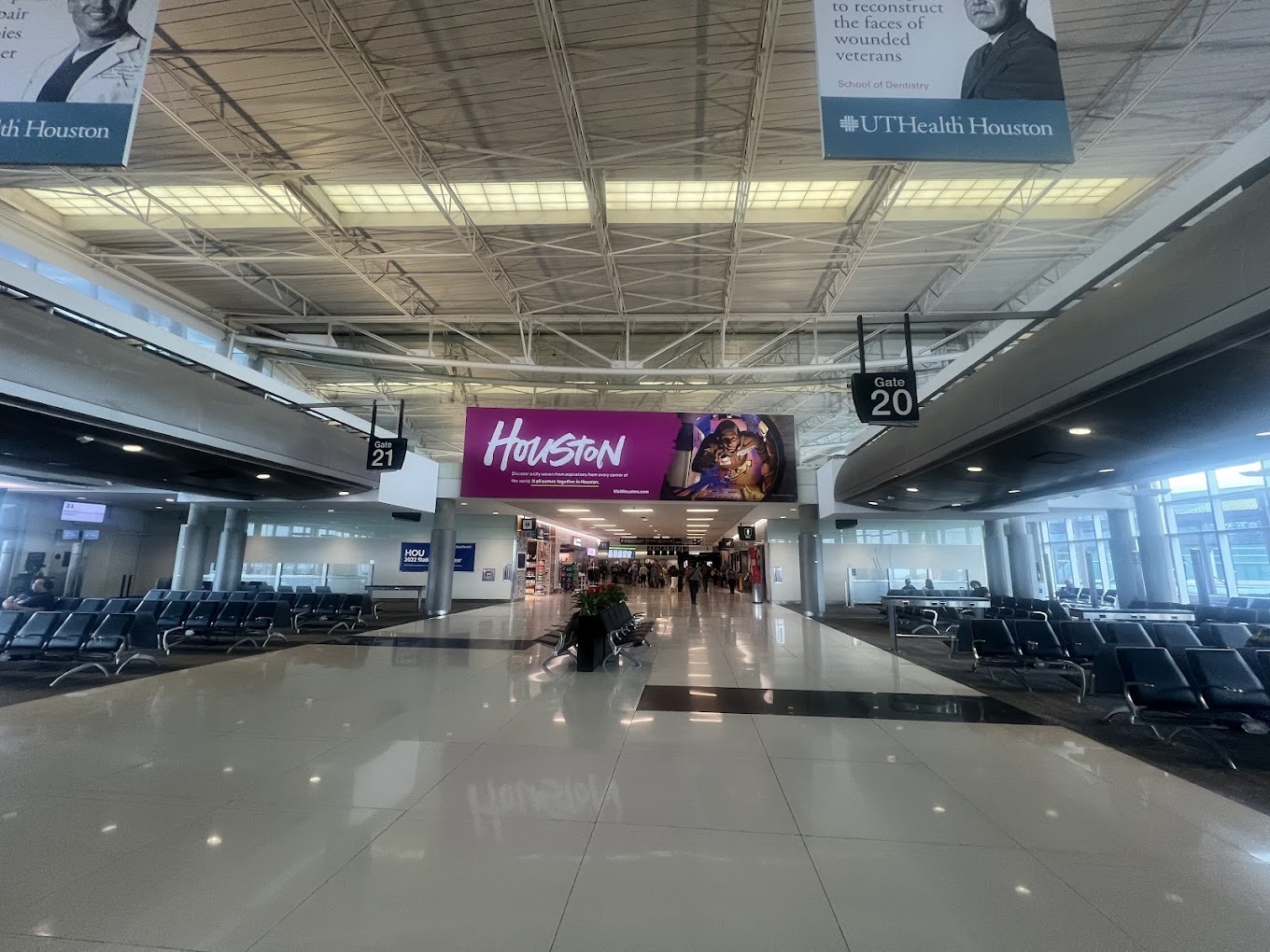
There are airports that move passengers, and there are airports that move people. William P. Hobby Airport — the older, scrappier, and frankly more charming of Houston’s two major commercial airports — falls squarely into the second category. Tucked into the southeast side of the city at 7800 Airport Blvd, Houston, TX 77061, Hobby has been doing the quiet, essential work of connecting Houstonians to the rest of the world since 1927. Nearly a century later, it still has something most mega-airports lost long ago: a genuine sense of place.
If you’ve spent any time navigating the sprawling terminals of George Bush Intercontinental Airport on the city’s north side, you’ll understand why a significant portion of Houston’s travel population will happily drive the extra miles south just to use Hobby. It’s not nostalgia. It’s practicality, personality, and — on a good day — something close to pleasure.
A Brief History Worth Knowing
Houston’s aviation story began not at Bush Airport, but right here. Hobby Airport is one of the oldest continually operating commercial airports in the United States, and its history reads like a compressed version of American aviation itself.
The airport started life as Houston Municipal Airport in 1927, built on what was then the southwestern edge of the city. It served as the region’s primary commercial gateway for decades, processing the early jets of the postwar era and growing steadily as Houston boomed on oil money and the space program. By the early 1960s, it handled virtually all of Houston’s air traffic.
That changed in 1969, when Houston Intercontinental Airport (now George Bush Intercontinental) opened to the north. Most major carriers fled to the newer, larger facility, and Hobby was briefly reduced to a mostly general aviation field. City planners even considered closing it. A lesser airport might have succumbed. Hobby didn’t.
The turning point came in 1971, when Southwest Airlines — then a scrappy Texas startup — made Hobby its operational home. That decision changed everything. Southwest’s growth and Hobby’s revival became intertwined stories, and today the airport serves as one of the carrier’s busiest hubs in the nation. The airport was renamed William P. Hobby Airport in 1967, honoring former Texas Governor William Pettus Hobby, whose family had deep Houston roots.
Where Exactly Is Hobby Airport?
Hobby Airport sits about 7 miles southeast of downtown Houston, a refreshing alternative to Bush Intercontinental’s 23-mile trek north. That distinction matters enormously in a city where traffic can turn a manageable drive into a test of patience.
The official address is 7800 Airport Blvd, Houston, TX 77061. It sits within easy reach of several major Houston neighborhoods — the Medical Center, Midtown, Montrose, and the Museum District are all within a reasonable drive. The Meyerland, Bellaire, and West University Place areas to the southwest also benefit from Hobby’s proximity.
For ground transportation, the airport is accessible via:
- I-45 South (the Gulf Freeway) — the most direct route from downtown
- Telephone Road and Airport Boulevard for surface street access
- MetroRail’s Purple Line — the long-awaited rail connection that finally extended to Hobby, linking the airport directly to downtown Houston and the Texas Medical Center via the Fannin South transit corridor
The METRORail stop is a genuine asset. Passengers can board at Hobby Airport Station and reach Downtown Houston in roughly 35 to 40 minutes — a meaningful alternative to rideshare pricing during peak hours.
The Terminal: Compact by Design, Not by Accident
One of Hobby’s most frequently cited virtues is the compactness of its terminal. There is one main terminal building, wrapped around a central ticketing and security hub, with concourses radiating outward. You can walk between gates in minutes — not the mileage-accumulating hike that defines airports with multiple disconnected terminals.
The current terminal complex reflects the ambitious $156 million expansion completed in 2015, which added a new international concourse and dramatically modernized the facility’s footprint. That expansion, triggered largely by Southwest Airlines’ launch of international service from Hobby, gave the airport its first international gates since 1968.
The terminal is organized into four concourses:
Concourse A — The main Southwest Airlines concourse, handling the bulk of domestic traffic. It’s efficient, well-signed, and moves people with minimal drama.
Concourse B — Additional Southwest gates, with the expected mix of fast-casual dining and retail.
Concourse C — The international concourse, where Southwest’s flights to Mexico, the Caribbean, and Central America depart. This was the crown jewel of the 2015 expansion, featuring a dedicated Federal Inspection Services facility for international arrivals.
Concourse D — A smaller concourse used for overflow and select operations.
Security lines at Hobby are consistently shorter than those at Bush Intercontinental, and the TSA PreCheck lanes function with the reliability that frequent travelers have come to depend on. The airport recommends arriving 90 minutes before domestic flights and 2 hours before international departures — guidance that reflects actual operating conditions rather than excessive caution.
Airlines and Destinations: Southwest’s Kingdom
Let’s be clear about the character of Hobby’s route network: this is, overwhelmingly, a Southwest Airlines airport. The Dallas-based carrier controls the vast majority of gates and accounts for the bulk of passenger volume. If your itinerary involves Southwest, Hobby is almost certainly your Houston airport.
Southwest operates non-stop services from Hobby to dozens of U.S. destinations including:
- Dallas (DAL) — Multiple daily flights, a key regional corridor
- Chicago Midway (MDW) — A workhorse route for both business and leisure
- Baltimore/Washington (BWI) — A popular East Coast connection
- Denver (DEN) — Critical mountain west access
- Las Vegas (LAS) — Consistently one of Southwest’s busiest routes nationally
- Orlando (MCO) — A steady performer, popular with families
- Los Angeles (LAX) and Phoenix (PHX) — Western gateway routes
- New York (LaGuardia/LGA and Newark/EWR) — Northeast connections
On the international side, Southwest has developed a solid portfolio of leisure-oriented routes including Cancún, Cabo San Lucas, Puerto Vallarta, Nassau, Montego Bay, Belize City, San José (Costa Rica), and Punta Cana, among others. These routes have made Hobby a genuine departure point for Gulf and Caribbean holidays without requiring connections through other hubs.
Other carriers maintain a smaller presence at Hobby, primarily serving charter and specialty routes.
Eating, Shopping, and the Art of Killing Time Gracefully
Hobby doesn’t pretend to be a luxury shopping destination, and the honesty is refreshing. What it offers instead is a well-curated selection of dining and retail options that serve travelers efficiently — and occasionally, genuinely well.
Dining highlights inside the terminal:
The post-security food options have improved substantially since the 2015 renovation. Travelers will find a mix of Houston-representative concepts alongside national quick-service staples.
Local operators with Hobby presence include concepts that nod to Houston’s food culture — a city taken very seriously about its culinary identity. Look for Gulf Coast seafood options, Tex-Mex standbys, and coffee operations serving the caffeine-dependent masses from early morning flights onward.
The Bush Bar, a perennial favorite with its Texas-focused cocktail and beer selection, reflects the airport’s commitment to feeling distinctly Texan rather than generically American.
Before you get to the airport, the surrounding Airport Boulevard and Gulf Freeway corridor offer the full range of Houston fast-casual options for pre-flight fueling. The neighborhood also contains several well-regarded independent diners and taquerias that locals consider far superior to anything airside — a ritual pre-travel meal is entirely feasible if your schedule permits.
Getting There: Ground Transportation Breakdown
Houston’s traffic is a legitimate planning consideration, and getting to Hobby involves a few meaningful choices.
By Car:
From downtown Houston (roughly 7 miles), the drive takes anywhere from 15 minutes at off-peak times to 45 minutes or more during rush hour via I-45 South. Take Exit 39 (Airport Blvd) and follow the signs. Terminal curbside drop-off is straightforward, with clear lane designations for rideshare, taxis, and private vehicles.
Parking:
The airport operates several parking facilities directly off Airport Blvd:
- Short-Term Parking Garage (adjacent to the terminal, Hourly rates) — For pickups and brief stops
- Long-Term Parking Garage — Daily rates, covered, connected to terminal via walkway
- Economy Parking Lot — Lowest daily rates, served by shuttle to the terminal
The parking facilities are managed by the Houston Airport System, and current rates and availability can be confirmed at the airport’s official site. The economy lot typically fills up during holiday travel periods, and advance reservation through the airport’s online portal is advisable for Thanksgiving, Christmas, spring break, and summer peak weeks.
Rideshare and Taxis:
Uber, Lyft, and traditional taxi service all operate at Hobby. Designated rideshare pickup zones are clearly marked on the lower level of the terminal exterior. The app-based services work reliably here, and surge pricing during peak arrival periods is the main variable to account for.
METRORail:
The Purple Line extension to Hobby Airport Station is one of the more passenger-friendly transit additions Houston has made in recent years. The station is a short walk or free shuttle ride from the terminal. Trains run from approximately 4:00 AM to midnight on most days, with headways of around 12 minutes during peak hours. A single fare covers the trip from Hobby to downtown’s Theater District or to the Texas Medical Center, making it genuinely useful for a wide range of Houston passengers — not just city center travelers.
Accessibility and Services
Hobby Airport maintains a comprehensive accessibility infrastructure. The terminal is fully ADA-compliant, with accessible restrooms, lowered check-in counters, elevator access throughout, and a Quiet Room available for travelers who need sensory relief — a feature that represents genuine thoughtfulness toward neurodiverse passengers and those with anxiety-related travel concerns.
The airport’s Traveler Assistance Program (TAP) pairs passengers who need assistance with trained volunteers who help navigate the terminal — a service that speaks well of the Houston Airport System’s approach to hospitality.
Animal relief areas are located both inside and outside security — a practical provision that pet-traveling Houstonians appreciate more than any glossy terminal renovation.
A USO lounge serves active military personnel and their families, a feature that feels appropriate given Houston’s strong military community.
The Houston Airport System: Hobby’s Institutional Context
Hobby operates within the Houston Airport System (HAS), a city department that also oversees Bush Intercontinental and the smaller Ellington Airport. The system’s administrative offices are located at 16930 John F. Kennedy Blvd, Houston, TX 77032 — the Bush Intercontinental campus — but Hobby’s operational management is handled on-site.
This dual-airport structure gives Houston a genuine choice, and it’s one the city wields meaningfully. Hobby and Bush serve different travel profiles:
Hobby skews toward leisure travelers, Southwest loyalists, regional business flyers, and anyone based on Houston’s south or southwest side. Bush Intercontinental, with its international connectivity and multiple terminal complex, serves long-haul international travel, United Airlines hub traffic, and passengers originating from Houston’s northern suburbs.
The competition between the two airports is muted — they largely serve non-overlapping markets — but the existence of Hobby as a genuine alternative keeps both facilities accountable to passenger experience standards in ways that monopoly airports rarely achieve.
What Makes Hobby Worth Choosing
Strip away the statistics and route maps, and what makes Hobby distinctively worth choosing is a set of qualities that are harder to quantify than gate counts or concession square footage.
Scale: The airport is human-sized. You can walk it. You won’t miss your connection because a moving walkway was out of service. You can be at the gate 45 minutes before departure without your heart rate increasing.
Location: For the southern half of Houston — one of America’s largest cities — Hobby’s position is simply superior. The Medical Center, Greenway Plaza, Midtown, Montrose, the Heights, and points west and south are all substantially closer to Hobby than to Bush.
Character: There’s a Texan self-assurance to Hobby that large hub airports sacrifice for efficiency. The art installations, the food that actually represents the city, the staff who have often worked there for years — these details accumulate into something that feels intentional.
Southwest’s network: If you’re a Southwest frequent flyer, Hobby is home in the truest operational sense. The airline’s rapid boarding process, no-checked-bag-fee policy (subject to current program terms), and generous rebooking policies all play out most efficiently at a facility built around their operating model.
Planning Your Trip Through Hobby: Practical Notes
A few ground-level considerations worth incorporating into your travel planning:
The peak congestion periods at Hobby mirror those at most domestic airports — Friday afternoon departures and Sunday evening returns are the most compressed. Holiday periods (particularly Thanksgiving weekend, the week between Christmas and New Year’s, and the spring break window from mid-February through late March) push the airport toward its operational limits. Arriving earlier than usual during these windows is straightforward advice, but genuinely necessary here.
The security checkpoint layout has been reconfigured multiple times as passenger volumes grew. TSA PreCheck users typically experience wait times under 10 minutes outside of major holiday peaks. Standard screening lines during peak domestic travel periods can stretch to 30-40 minutes — a meaningful variable if your departure falls in the Friday 4:00-7:00 PM window.
International arrivals at Hobby proceed through the Concourse C FIS facility. Federal clearance times vary significantly based on how many international flights are arriving simultaneously. Since most of Hobby’s international routes are leisure destinations served primarily by Southwest, the international arrival flow is manageable compared to major legacy carrier hubs — but budget 45-75 minutes for the CBP process on return from Mexico or the Caribbean.
The Future of Hobby Airport
The Houston Airport System has maintained an active capital improvement program at Hobby, with ongoing projects aimed at terminal modernization, sustainability improvements, and operational capacity. The airport’s Master Plan has long-term projections built around continued Southwest growth and modest capacity expansion.
Sustainability initiatives have included energy efficiency retrofits to the terminal’s mechanical systems and a commitment to reduced single-use plastics in concession operations — modest measures, but reflective of the direction most major American airports are moving under pressure from both passengers and regulators.
The broader question of Hobby’s future is inseparable from Southwest Airlines’ network evolution. As the carrier has navigated a period of strategic recalibration — expanding international service, adjusting its domestic footprint, and responding to competitive pressure from legacy carriers — Hobby’s route network has evolved accordingly. The airport’s long-term vitality is closely tied to Southwest’s decisions about its Gulf Coast hub strategy.
What seems certain is that Hobby’s core competitive advantage — proximity to Houston’s urban core, a manageable travel experience, and a loyal base of regional passengers — isn’t going anywhere. Cities change. Airports age. But the geography that puts Hobby 7 miles from downtown Houston and its position as Southwest’s home-away-from-home create a durable value proposition that no amount of Bush Intercontinental terminal expansion can neutralize.
Final Word: The Airport That Gets It Right
Not every trip needs an adventure. Sometimes you need to get from Houston to Nashville for a Tuesday morning meeting and back by Thursday evening without incident. Sometimes you need to get your family to Cancún without the logistics of a major international hub swallowing your patience before the vacation even starts.
For those trips — which account for the vast majority of American air travel — William P. Hobby Airport at 7800 Airport Blvd, Houston, TX 77061 delivers with a consistency that its larger neighbor doesn’t always match. It is, in the best sense of the phrase, a working airport. It knows what it is, serves who it serves, and does so with an efficiency that rewards the passengers smart enough to choose it.
In a city as sprawling and complex as Houston, that clarity is its own kind of luxury.
William P. Hobby Airport (HOU) — 7800 Airport Blvd, Houston, TX 77061 | Airport Information: (281) 233-1600 | Houston Airport System: houstontx.gov/airports